

Designing for Medical Hardware: Bedside Terminal and eCheck-in Terminal
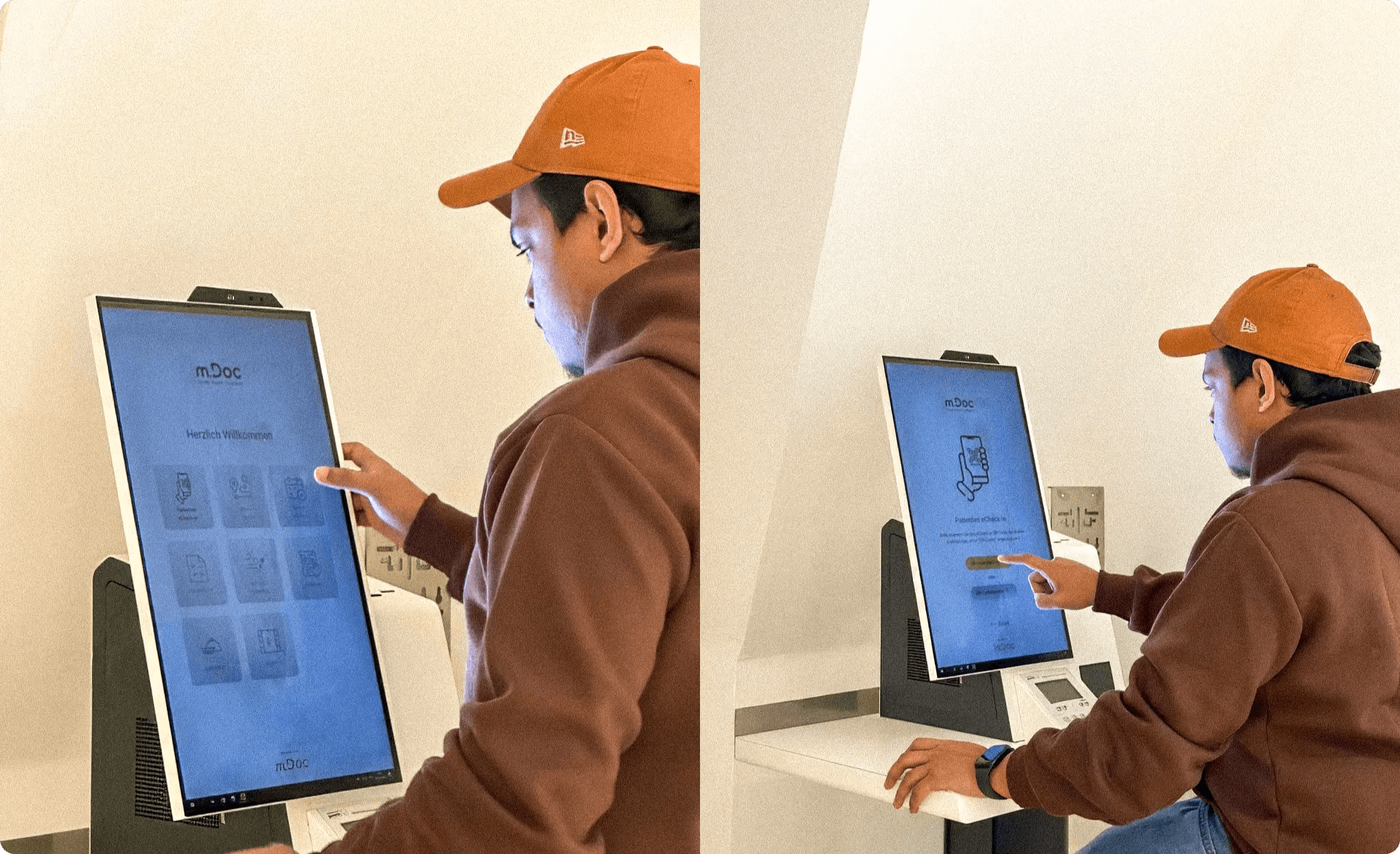
Creating safe, accessible, and clinically usable interfaces for real hospital devices
Note: Only a few abstracted snippets and non-sensitive screenshots are included here due to NDA restrictions. The designs, flows and system details shown are intentionally limited.
Overview
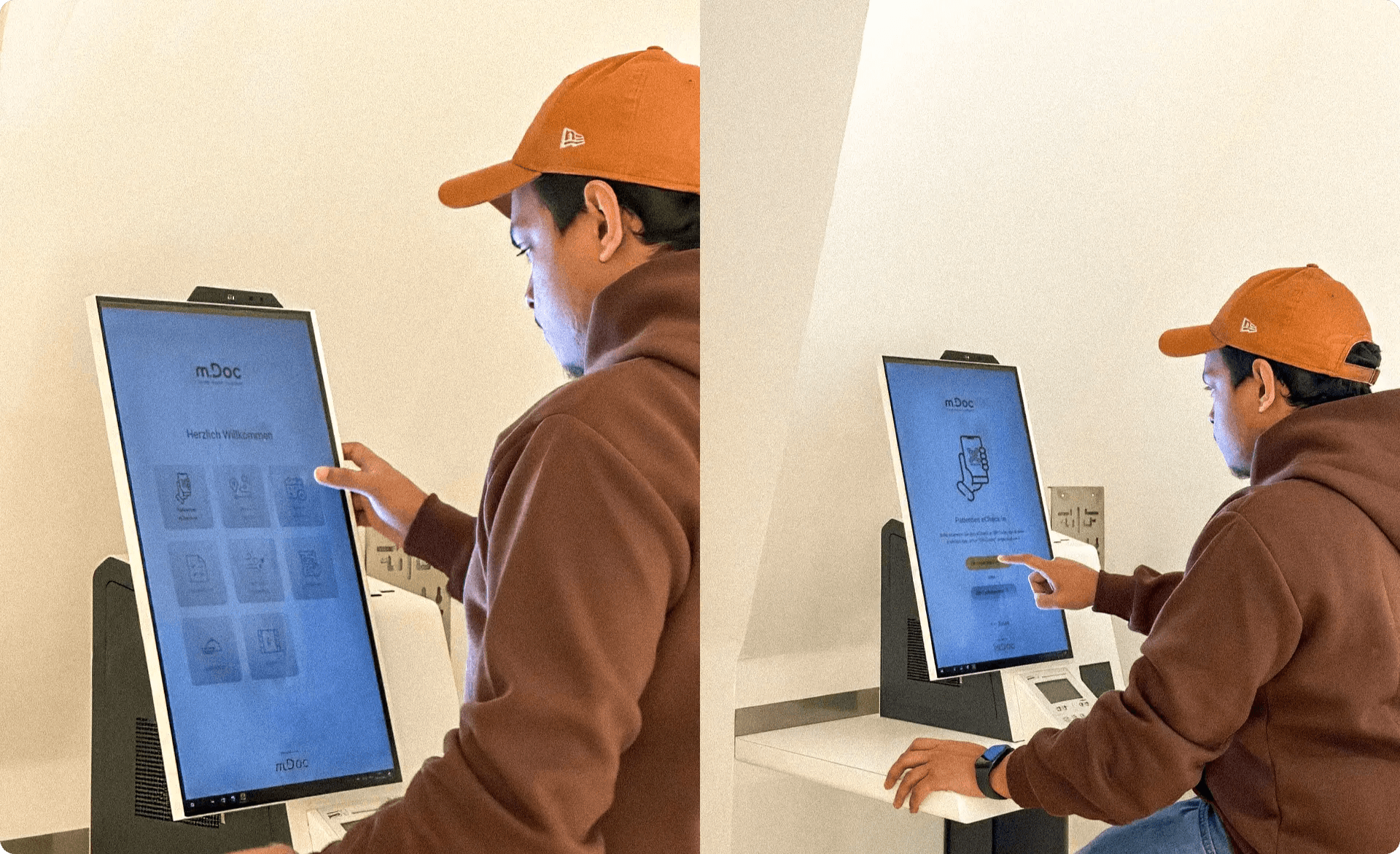
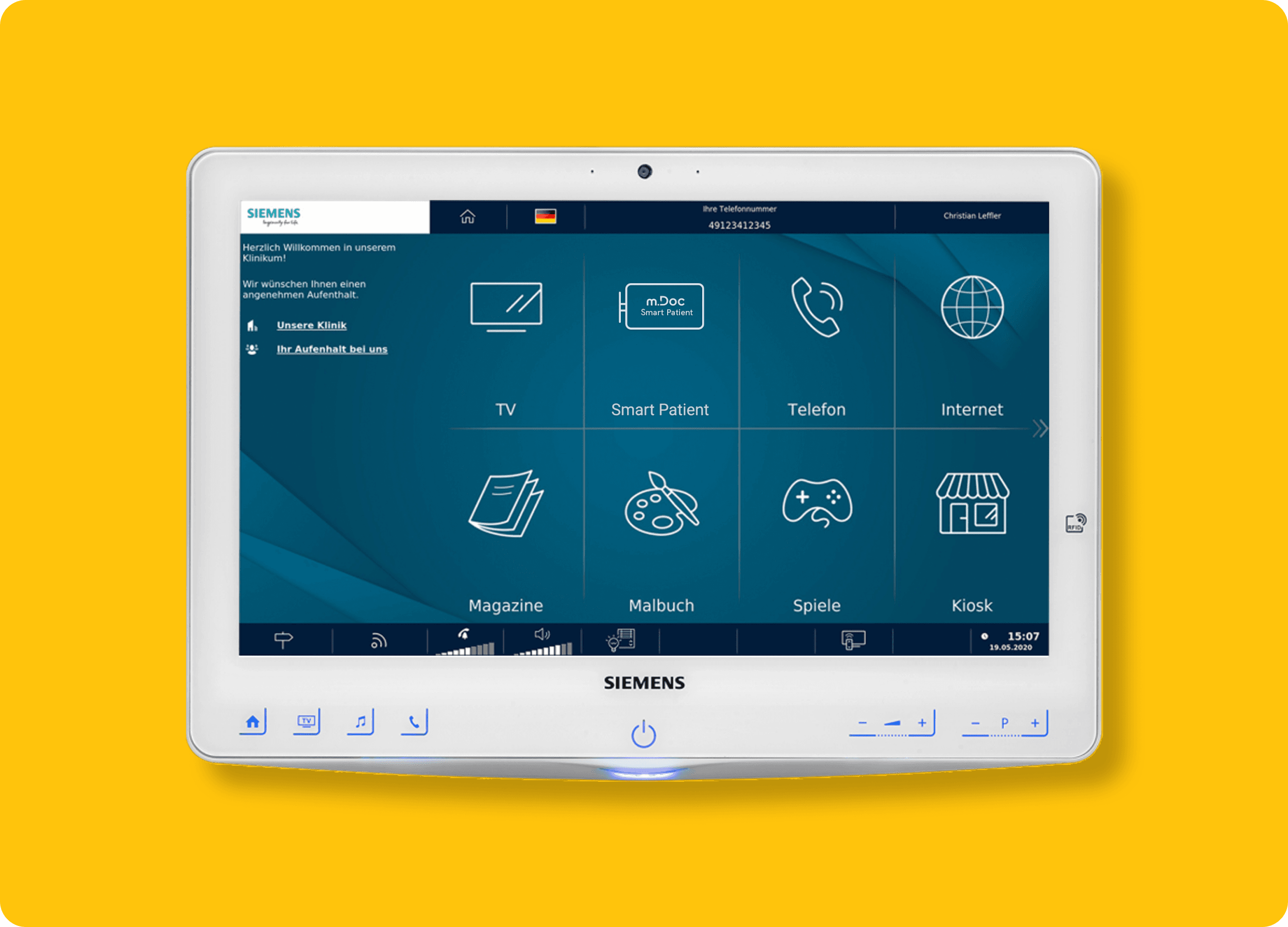
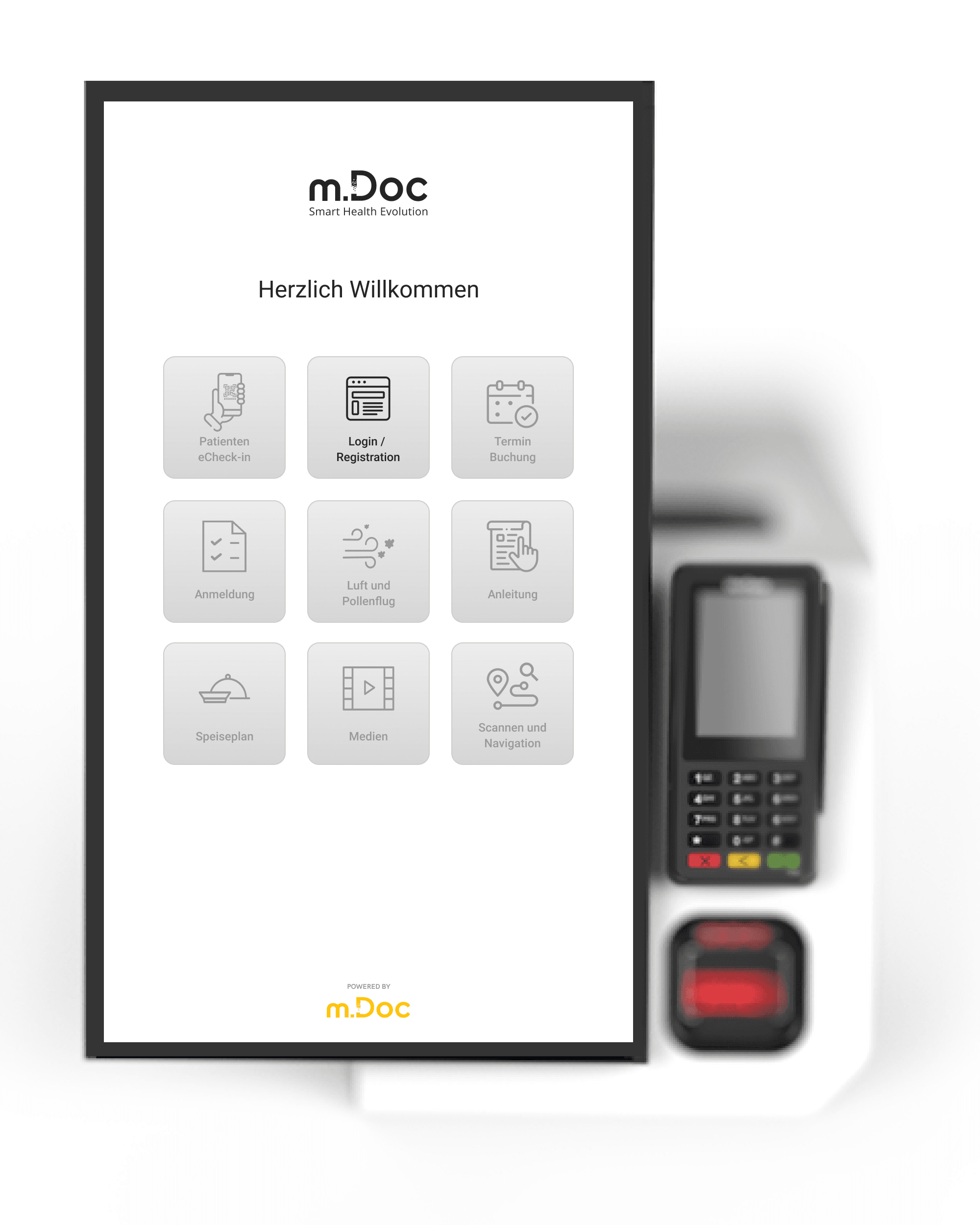
In 2022, as part of the m.Doc UX Team, I co-designed two medical-hardware experiences used directly by patients inside hospitals: the Bedside Terminal for inpatients and the eCheck-in Terminal for outpatient self-registration.
These devices support critical steps in the patient journey.
- Bedside Terminal: used by inpatients while lying down or in weakened physical condition
- eCheck-in Terminal: used by outpatients to complete self-check-in and registration before appointments
The goal was to create simple, safe and low-effort interactions shaped by real hardware testing, not assumptions.
My Role
I supported the Lead Designer and Product team with both design and hands-on testing. My main contributions were:
- Helping design the core flows for both terminals
- Testing the designs directly on the physical devices
- Identifying real-world issues like glare, reachability and low tap accuracy
- Simplifying steps so patients could complete tasks independently
- Ensuring the flow felt clear, safe and usable in an actual hospital environment
Key Challenges
Bedside Terminal:
Patients interact while lying down or recovering. Precision is low. Attention is limited due to medication or stress. Lighting creates glare. Viewing distance and angle change constantly.
eCheck-in Terminal:
Patients are standing, under time pressure and may not understand medical terminology. Touch accuracy is lower on vertical screens. Long forms create high error risk.
These limitations created a need for highly controlled and predictable interactions.
Design Approach
1. Large and safe touch areas
Reduced the chance of mis-taps and supported weak motor control.
2. Strict linear task flows
One action at a time. No branching. Lower cognitive load and lower risk of procedural mistakes.
3. Chunked forms and guided steps
Patients completed complex tasks in small, manageable segments.
4. High-contrast and glare-resistant layouts
Improved visibility in strong overhead hospital lighting.
5. Clear system feedback
Patients always understood the next step, the result of an action and any error states.
6. Real-device validation
All decisions were influenced by hands-on testing on both the Bedside Terminal and the eCheck-in Terminal.
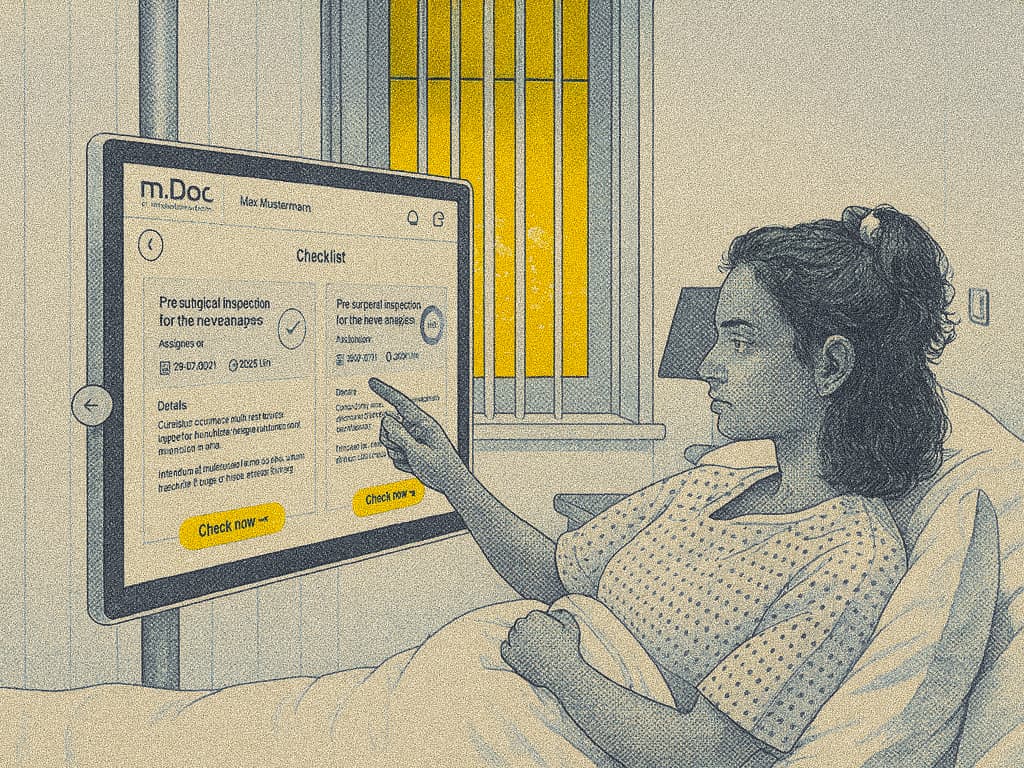
Bedside Terminal: Impact for Inpatients
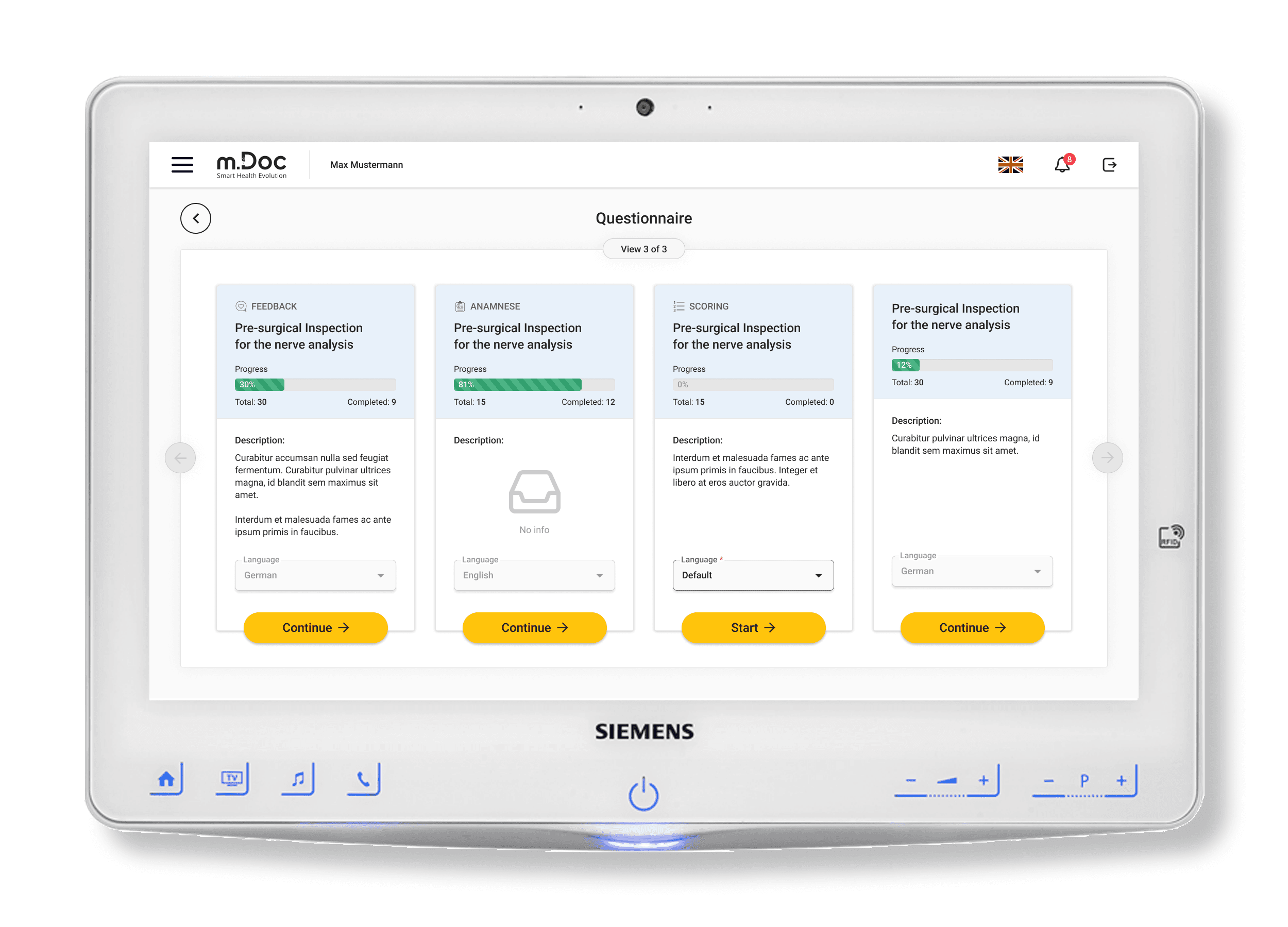
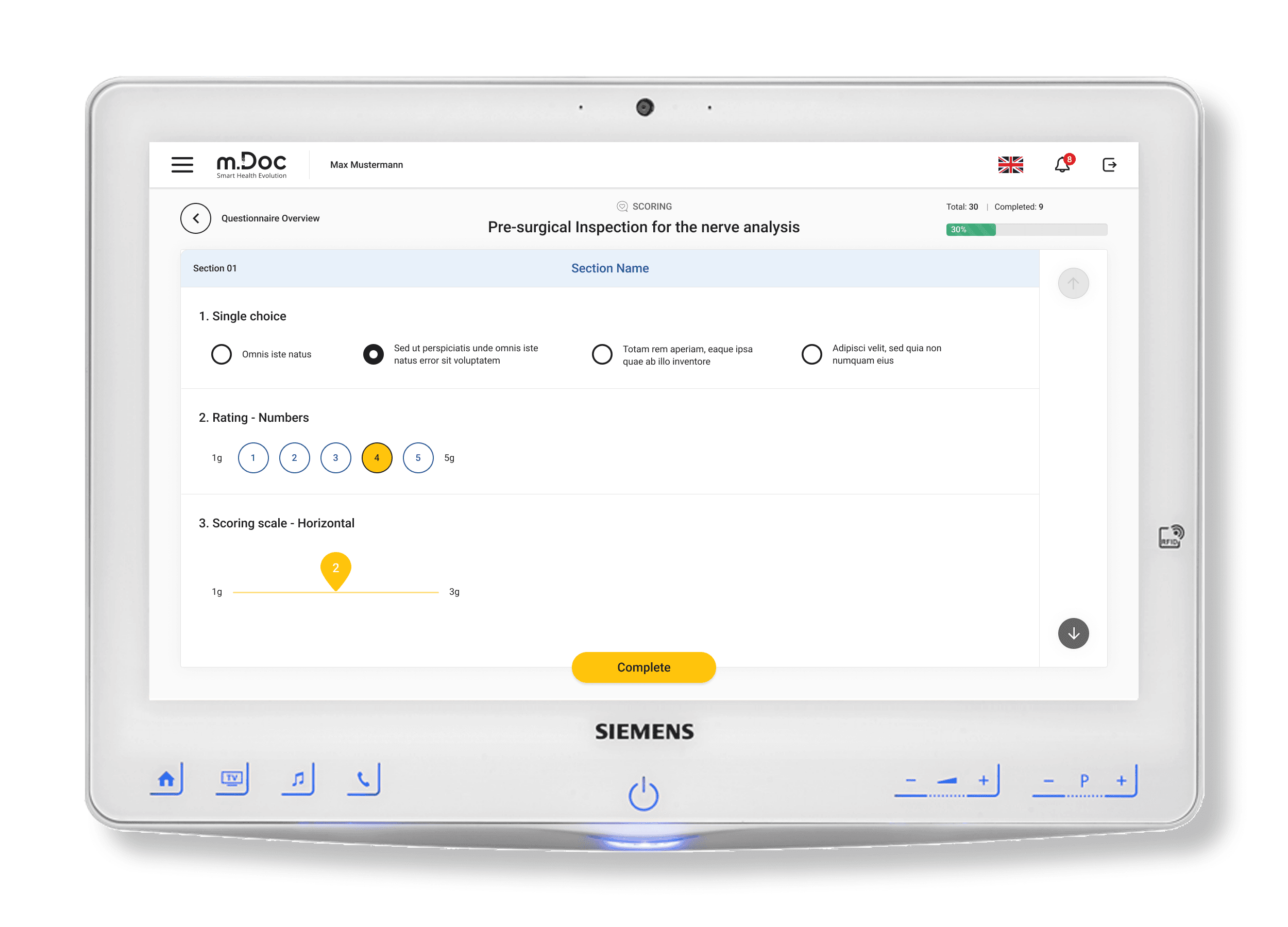
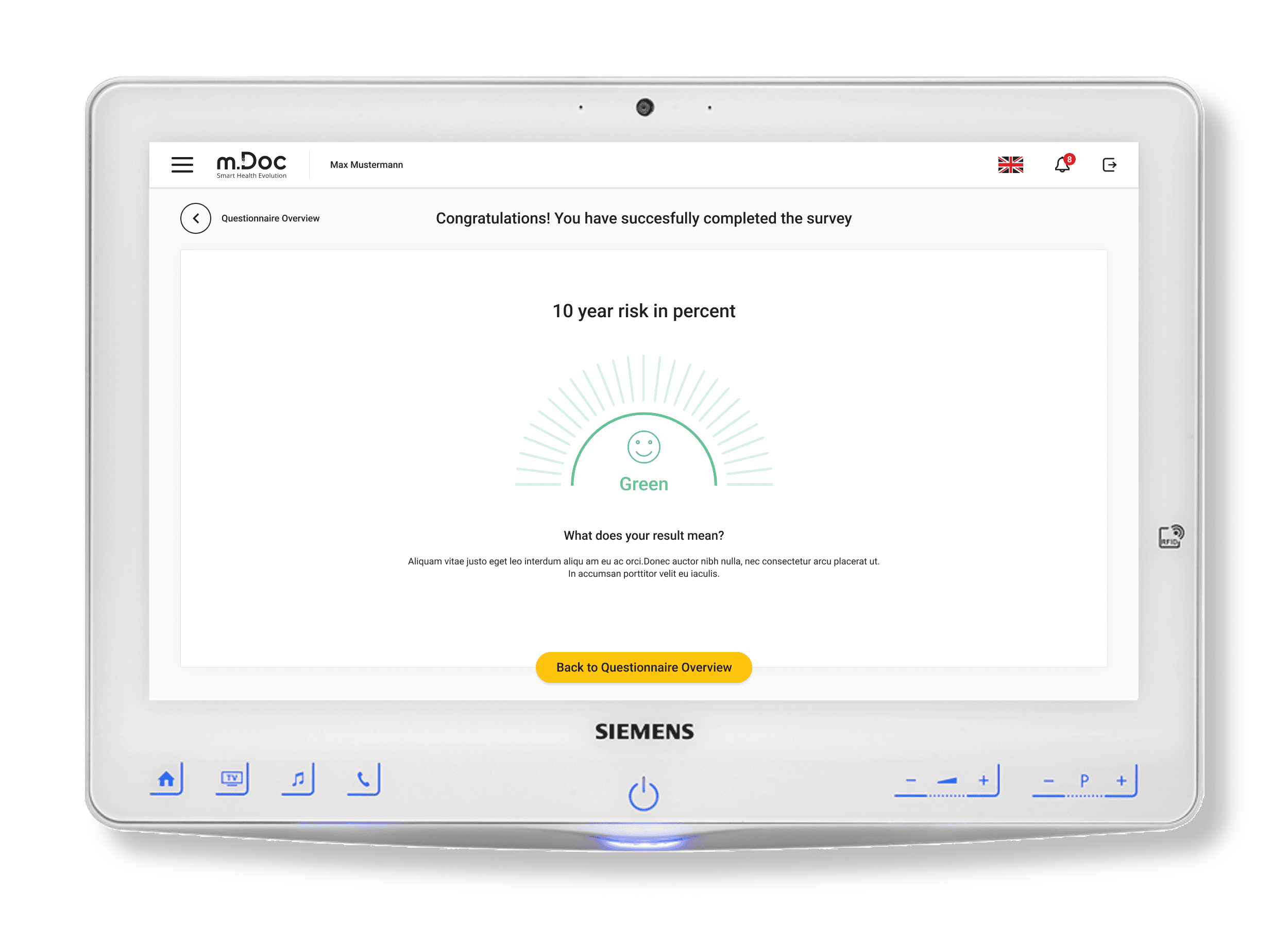
Only high-level and NDA-safe visual snippets are shown.
Outcomes:
- Fewer patient mistakes
- Less nurse assistance required
- Clearer information for patients under stress or medication
- Large-screen patterns carried forward into future design work
eCheck-in Terminal: Impact for Outpatient Registration
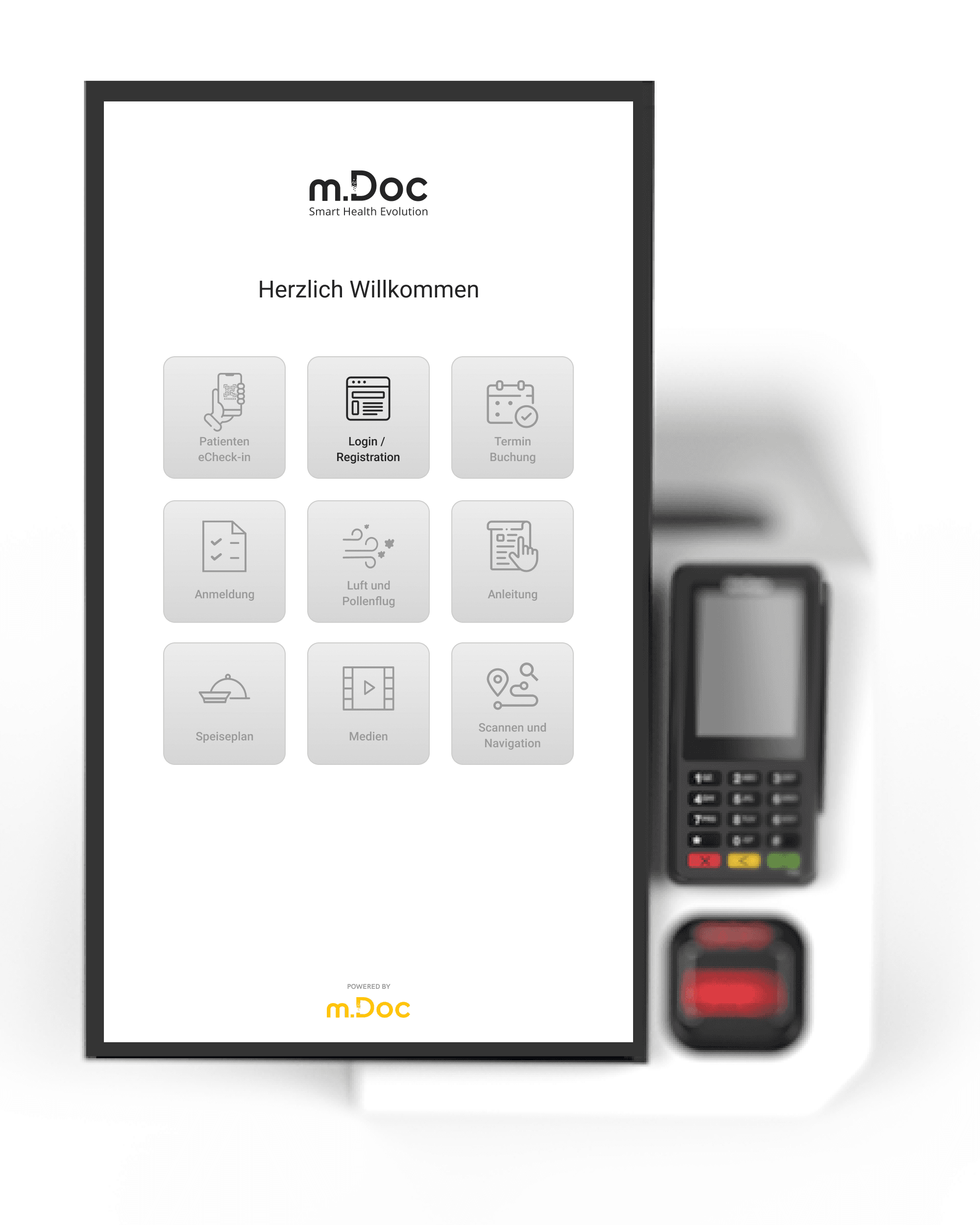
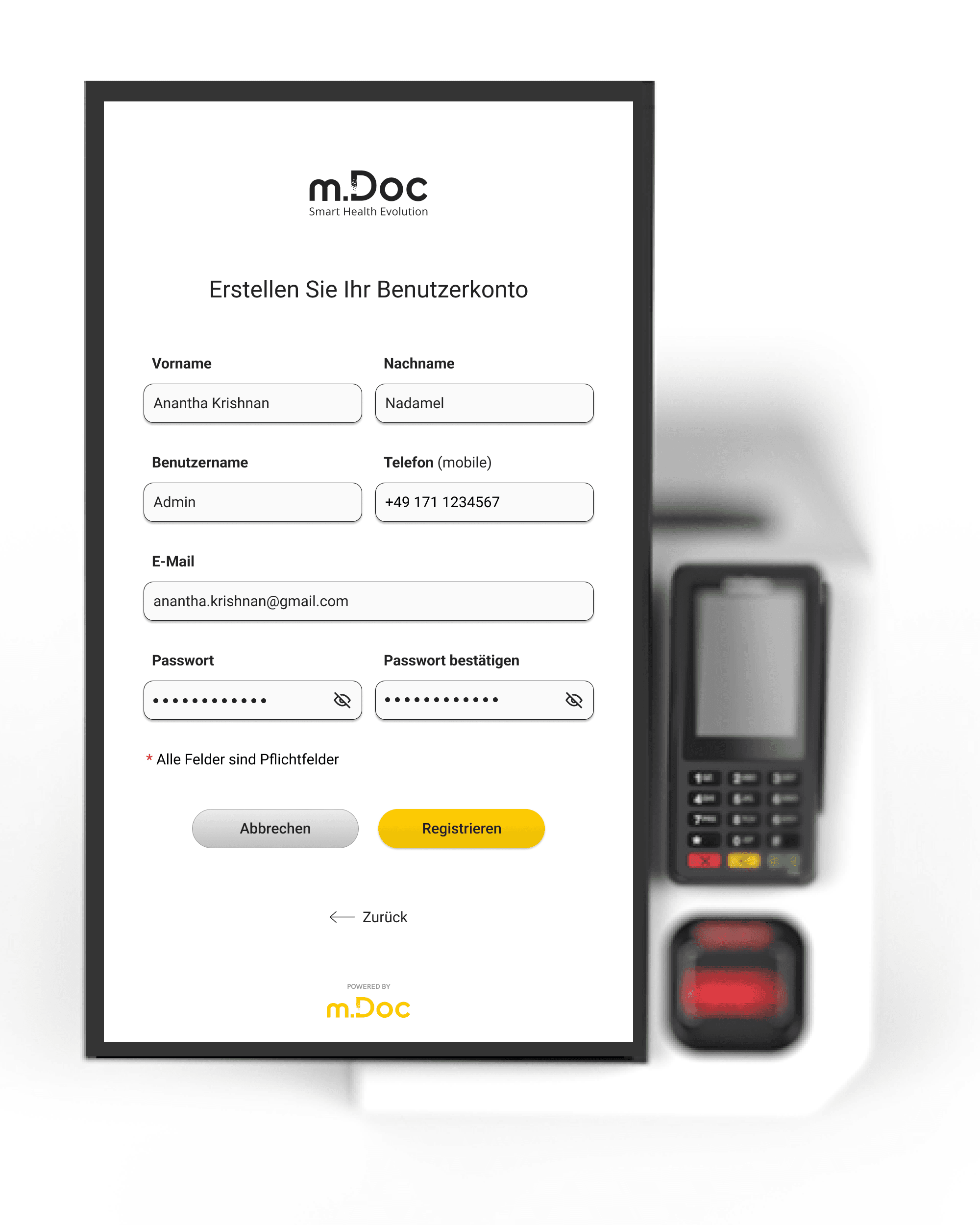
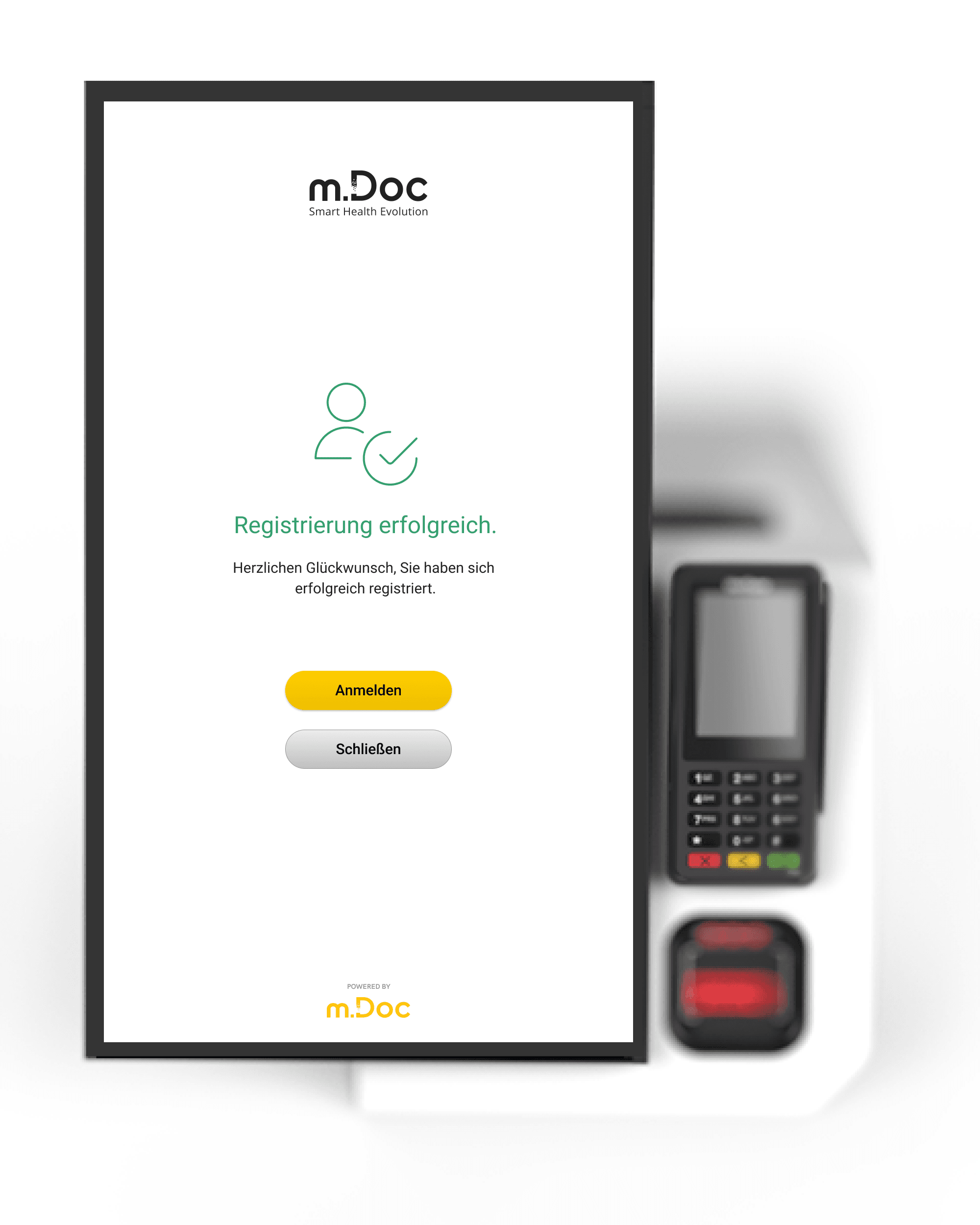
Only high-level and NDA-safe visual snippets are shown.
Outcomes:
- Faster patient check-ins
- Fewer registration errors
- Smoother queue movement
- Reduced staff involvement for repetitive tasks
Why real hardware testing was critical
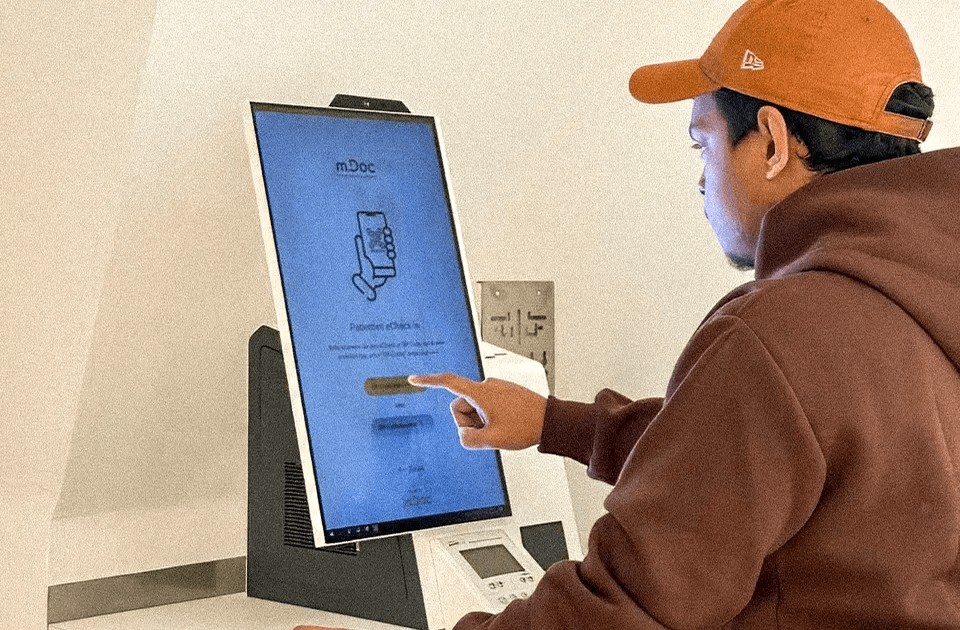
Since we had both devices in the Cologne office, we tested every flow directly on the real hardware. This quickly revealed problems we could never see in Figma, such as:
- touch inaccuracy on vertical screens
- glare blocking important text
- limited reachability for lying patients
- readability issues at different distances
- slow device feedback creating uncertainty
These on-device insights shaped the final flow and made the experience safer, clearer and more comfortable for patients.
Project Timeline and Status
The Bedside Terminal and eCheck-in Terminal designs were completed and validated in 2022 as part of Generation 6 of the platform.
From mid-2022 onward, the company shifted focus to Generation 7, which moved in a different strategic direction. Because of this shift, the terminal redesigns were not continued or implemented in Gen7 but remain part of the future roadmap with fully validated foundations ready for development.